Target clearance price endings: what .04 and .08 actually mean
McKenna Harmony-Greer, Deals Editor
Published September 2, 2026 · Updated September 4, 2026✓ Deals verified September 4, 2026
RebelDealz is reader-supported. When you buy through links on our site, we may earn an affiliate commission at no extra cost to you. Prices and availability can change after we publish. How we find & verify deals
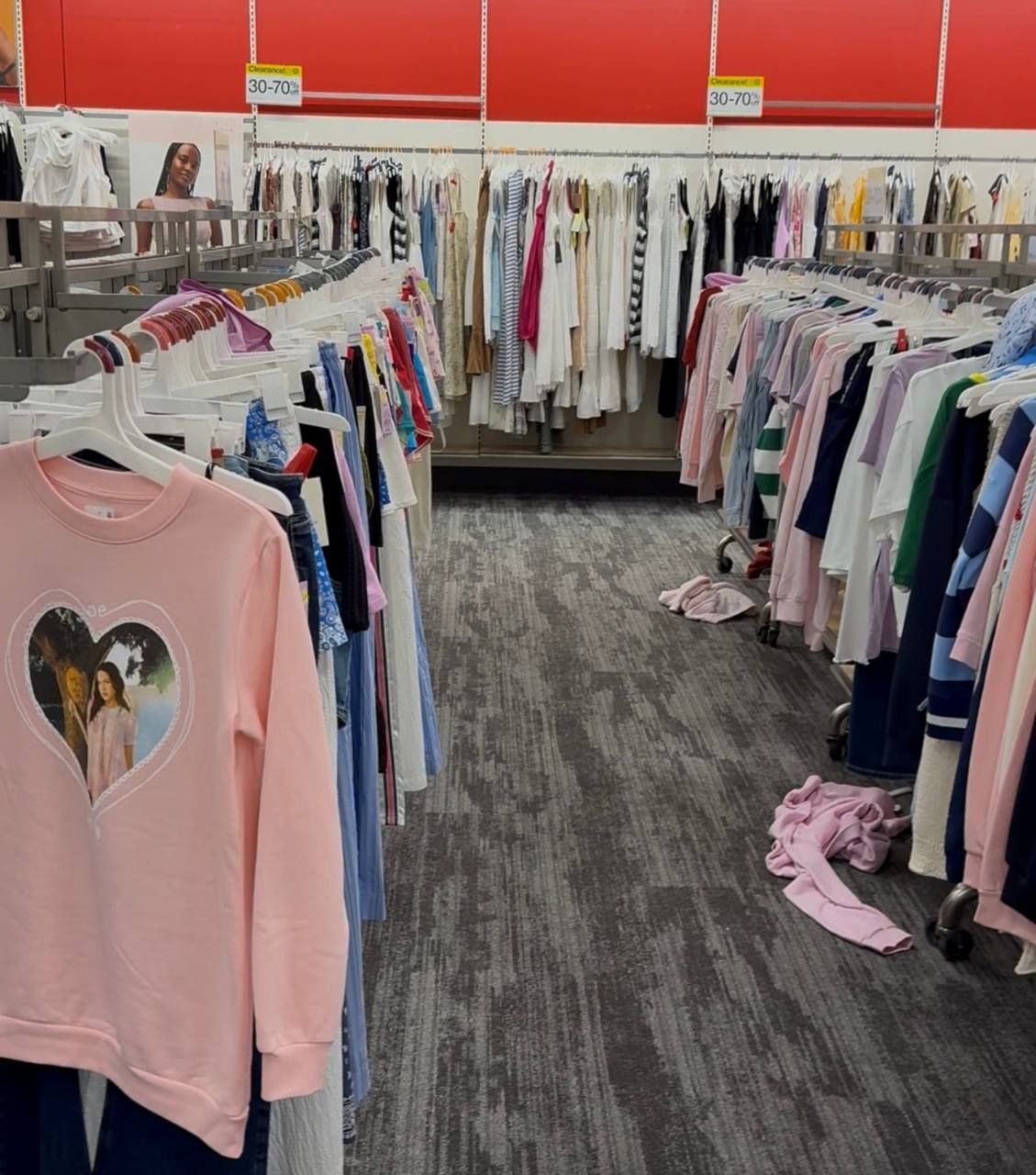
A Target clearance price ending in 4 or 8 tells you the item is on clearance and nothing else. The digit is arithmetic: the original price times the discount, rounded. Target said as much in 2014, when a spokesperson told reporters it is "not possible to determine the final markdown or timing of the price change from the item's current price."
The real signals are the percentage badge in the tag's upper-right corner (15, 30, 50 or 70) and the date printed at the bottom. Read those, not the cents.
The ".04 means final markdown" rule has topped Google results for this query since at least 2012, and it was still being published as fact by home and lifestyle sites in the summer of 2026. It isn't true. Below is the evidence, what the tag actually tells you, and how to shop the markdowns without the folklore.
What does a price ending in 4 mean at Target?
It means the item is on clearance. Target's regular prices end in 9: $4.99, $14.99, $29.99. When a price ends in 4 or 8, that's the tell that a markdown has happened. A 4 and an 8 mean the same thing, which is the first sign the "secret code" story falls apart. If the cents digit carried meaning, two digits wouldn't both just mean "clearance."
The percentage badge, not the cents, tells you the tier. The badge in the upper-right corner of the tag shows how far off the original price the item currently is: 15, 30, 50 or 70 percent (90 on seasonal goods). One more wrinkle: yellow clearance stickers also cover short-term temporary price cuts, so the badge is what confirms you're looking at a true markdown ladder, not a two-week promo.
Why the ".04 is final" rule is wrong, in Target's own words
Here's the correction, and it comes from Target itself. In April 2014, Target spokesperson Evan Lapiska told WMC Action News 5 in Memphis: "At Target, we use a number of different factors to determine the price of an item. The ending digit of a clearance price is determined by several factors, including the original retail price and the applied percentage discount." That statement is on the record, by name, from the company.
The same month, a Dallas CBS station's I-Team got a version of the statement with the sentence that matters most: "It is not possible to determine the final markdown or timing of the price change from the item's current price." Target repeated the point in 2017, telling a consumer advocate that it isn't accurate that markdown dates for specific products or categories occur on specific days of the week. Professional fact-checkers have looked at the price-code claim too and rated it false, noting that markdowns aren't uniform across the chain and that prices ending in 8 are not the last markdown.
You'll see the .04 rule repeated everywhere, and it isn't true. The digit isn't a message to shoppers. It's the residue of a calculation.
The rounding proof (July 2013)
In July 2013, one deal blogger did what nobody writing the myth had bothered to do: photograph an item and follow it. The item was a $4.99 bottle of All Small & Mighty detergent. It was photographed on the shelf at $4.24, a price ending in 4, the digit the myth says means "final markdown, buy now or never." The following week, the same bottle was on the shelf at $3.48, 30 percent off. The "final" price had dropped again.
Every price in that ladder is the original price times the discount, rounded down:
| Markdown | Shelf price | Arithmetic | Last digit |
|---|---|---|---|
| Original | $4.99 | 9 | |
| 15% off | $4.24 | 4.99 x 0.85 = 4.2415 | 4 |
| 30% off | $3.48 | 4.99 x 0.70 = 3.493 | 8 |
| 50% off | $2.48 | 4.99 x 0.50 = 2.495 | 8 |
| 75% off | $1.24 | 4.99 x 0.25 = 1.2475 | 4 |
The markdown rows are the photographed prices; the original-price row is added for the math. The item was photographed at $4.24 and found at $3.48 the following week. Note that 75 percent was the final tier at that store in 2013; shoppers reported 70 percent as the floor at their stores by 2015, and 70 is the reported floor today. Store-level variation is real and Target has never published a chainwide rule.
The arithmetic works on other prices too. $39.99 at 50 percent off computes to $19.995, which rounds to $19.98. $14.99 at 75 percent off computes to $3.7475, which rounds to $3.74. The endings in 4 and 8 are what falls out of the math, not what the math is trying to say.
The ranking sites can't even agree on the code
This is the part that should end the myth on its own. The pages ranking for this query don't agree with each other. One says .04 is final and .08 means another drop is coming. Another, published in 2026, inverts that entirely and says .04 is the first markdown and .08 is the final one. A radio station's 2015 guide assigned 8 to the 15-percent tier and 6 to everything else. A national news outlet listed .98, .88, .04 and .24 all as clearance endings. Four incompatible codes, all presented as fact, none sourced to Target.
The oldest version of the debunk dates to 2012, before the photographed proof. Within ten weeks of that 2013 proof being published, one well-known tips site printed the myth while citing the very post that debunked it as its source. Thirteen years later, the myth is still on page one. That's why this article leads with Target's own words instead of another retelling.
What's actually on a Target clearance tag
Forget the cents. Here's what the tag itself tells you:
| Element | Where on the tag | What it tells you | Status |
|---|---|---|---|
| Percentage badge | Upper-right corner | Current tier: 15, 30, 50 or 70 (90 seasonal) | Verified via Target statement to CBS 11 plus store guides |
| Clearance price | Center, large print | What you pay; ends in 4 or 8 | Widely reported |
| Original price | Bottom-left, small print | The base the percentage is taken from | Widely reported |
| DPCI item number | Middle | Target's internal item ID | Widely reported |
| Markdown date | Bottom-left, MM/DD | When the tag was printed; shoppers use it to estimate the next drop | Widely reported; whether it's the first-markdown date or the current tier's date is disputed |
One honest gap: sources disagree on whether the printed date is the day the item was first marked down or the day the current tier began. Target hasn't published an explanation. Shoppers use it as the start of the current markdown, and that's the honest way to treat it.
How often does Target lower their clearance prices?
For most general merchandise, the ladder runs 30, then 50, then 70 percent off. Some categories, including electronics, food, beauty and LEGO, start at 15 percent instead. Then the cadence: markdowns come roughly every two weeks, with trackers reporting anywhere from 10 days to three weeks, and it varies by store and department. This is a rhythm, not a schedule.
| Badge (upper-right) | What it means | Typical time at this tier | Applies to | Status |
|---|---|---|---|---|
| 15 | First markdown for select categories | About 2 weeks (varies) | Electronics, food, beauty, LEGO; some stores and items | Widely reported |
| 30 | First markdown for most merchandise | About 2 weeks (10 days to 3 weeks reported) | Most general merchandise | Widely reported |
| 50 | Second markdown | About 2 weeks (varies) | General merchandise | Widely reported |
| 70 | Final markdown for non-seasonal goods | Until sold or pulled (varies) | General merchandise; 75 seen at some stores through about 2015 | Widely reported |
| 90 | Seasonal only | Days, not weeks; reached roughly 5 to 6 days after a holiday (varies) | Holiday and seasonal decor, not food, not most beauty | Widely reported |
Seventy percent is the floor for non-seasonal merchandise. Target hasn't said what happens to items that don't sell at 70; they get pulled from the floor, and beyond that the company hasn't commented. And per the 2017 statement, don't count on a fixed weekday for any department. If you want how other chains handle their markdowns, we keep more clearance guides for exactly that.
Does Target clearance go to 90% off?
Only on the seasonal track. Holiday and seasonal merchandise runs 50 percent off the day after the holiday, around 70 percent about three days later, and 90 percent two to three days after that, though the pace varies by store. Holiday food generally stops at 70, and some beauty does too. Don't wait for 90 on a household item; it isn't coming. Our holiday clearance schedule isn't part of this pass, but the seasonal calendar deserves its own article and gets one.
How to see Target clearance prices
You can't, not online. Target's own price match page says it plainly: "Online clearance prices are separate from in-store clearance pricing. In-store clearance pricing isn't visible online. Clearance items and pricing can only be found and purchased in-store." That's from Target's price match guarantee page, and it settles the question.
Target's online clearance section exists, but it's a separate, shallower assortment that rarely goes past 50 percent off. The Target app shows Target.com prices and Circle offers, not your store's shelf markdowns. And as of August 2026 there's a fresh twist: Target's CEO noted that digital traffic from AI shopping platforms is growing fast, but because in-store clearance never appears online, AI shopping tools structurally miss it too. The best markdowns in the building are invisible to every screen you own. You have to walk the aisles.
Are clearance sales final at Target?
For returns, no. Clearance items fall under Target's standard return policy: 90 days for most new, unopened items, with an extra 30 days for Target Circle Card holders and Circle 360 members. Clearance is not on Target's final-sale exceptions list. Electronics carry a 30-day window and Apple products 14 days. Check your receipt for any "final sale" marking on specific items, but clearance as a category is returnable.
For price adjustments, yes, final. Target's price match covers an identical item at Target.com, in Target stores or with a Target Circle deal, within 14 days of purchase, and it explicitly excludes "clearance, closeout, liquidation sales." Screenshots don't count; you present the live price on Target.com on your device. Competitor price matching ended entirely on July 28, 2025, with Target saying its customers overwhelmingly price match Target itself. The Target Circle Card 5 percent discount still comes off clearance prices, and Target Circle deals are now matchable with proof of membership. If the clearance price isn't low enough, today's deals might be.
What are some hidden clearance deals at Target?
There's no secret list, and any tool claiming to reveal in-store clearance prices is contradicting Target's own help page. What's real is store-level variance: Target itself says markdowns aren't uniform, and shoppers consistently report that timing and floor tiers differ from store to store. The workable method is the one on the tag. Check the percentage badge, note the printed date, and judge by stock depth. If an endcap is packed with 30-percent items that have sat for three weeks, a 50-percent sticker is probably coming. Go early, because the good tiers don't last.
The contrast worth knowing: Dollar General's penny list is a real coded signal, where a one-cent price genuinely means the item is a penny at the register. Target's cents aren't a code. They're a calculation. For current finds and store-specific patterns, our members keep current Target deals updated, and the community has watched this two-week rhythm play out across hundreds of reported finds.
Myth vs. reality
| Claim | What's true | Source |
|---|---|---|
| .04 is the final markdown and .08 means another drop | The digit is the rounding of original price x discount; Target says you can't read the future from it; a $4.24 item dropped again the next week | Target statement 2014; widely shared 2013 photo |
| .06 is a distinct markdown stage | No evidence; it doesn't appear in any photographed ladder | Research pack |
| Red tags drop again and yellow tags are final | Sources can't agree what color the tag even is; no evidence for either meaning | Research pack |
| The app reveals hidden in-store clearance | Target says in-store clearance pricing isn't visible online | target.com price match page |
| You can price-adjust a clearance buy within 14 days | Clearance, closeout and liquidation are excluded from price match | target.com price match page |
| Each department is marked down on a fixed weekday | Target called that inaccurate in 2017 | Target statement 2017 |
| Clearance is final sale | Returnable under the standard 90-day policy unless marked otherwise; only price matching is off the table | target.com returns pages |
Frequently asked questions
Does a price ending in .08 mean it will be marked down again?+
No. The digit comes from the original price times the discount, rounded. Target's spokesperson said in 2014 that the ending digit is "determined by several factors, including the original retail price and the applied percentage discount," and that the final markdown can't be determined from the current price. Check the percentage badge in the tag's upper-right corner instead; that tells you the current tier.
Can I price match a Target clearance item?+
No. Target's price match policy excludes clearance, closeout and liquidation sales. The policy matches only identical items at Target.com, in Target stores or with Target Circle deals, within 14 days of purchase, with a live price on your device rather than a screenshot. Competitor price matching ended July 28, 2025. The Target Circle Card 5 percent discount still applies to clearance purchases.
Can you return clearance items at Target?+
Yes, under the standard policy: 90 days for most new, unopened items, plus 30 extra days with a Target Circle Card or Circle 360 membership. Clearance is not on Target's final-sale exceptions list. Electronics have a 30-day return window and Apple products 14 days. Check the receipt for any "final sale" marking on the specific item before you buy.
What does the number in the corner of a Target clearance tag mean?+
It's the percentage off the original price: 15, 30, 50 or 70, and 90 on seasonal goods. It shows the current markdown tier, so a 30 means one markdown has happened and, for most general merchandise, two more are likely before the item reaches its floor at 70 percent off.
Does Target clearance go to 90% off?+
Only seasonal and holiday merchandise. That track runs 50 percent off the day after the holiday, around 70 percent three days later, and 90 percent two to three days after that, though timing varies by store. Non-seasonal goods stop at 70 percent, and holiday food and some beauty also stop at 70. Don't wait for 90 on everyday items.
How to see Target clearance prices?+
In store only. Target's own help page states that in-store clearance pricing isn't visible online and that clearance items and pricing can only be found and purchased in-store. Target's online clearance section is a separate, smaller assortment that rarely goes past 50 percent off, and the app shows Target.com prices rather than your local store's shelf markdowns.
About McKenna Harmony-Greer
Deals Editor